
In a post-COVID world, amid the rise of influencers and inflation, is there still a role for a food critic in our ever-changing restaurant and media market?
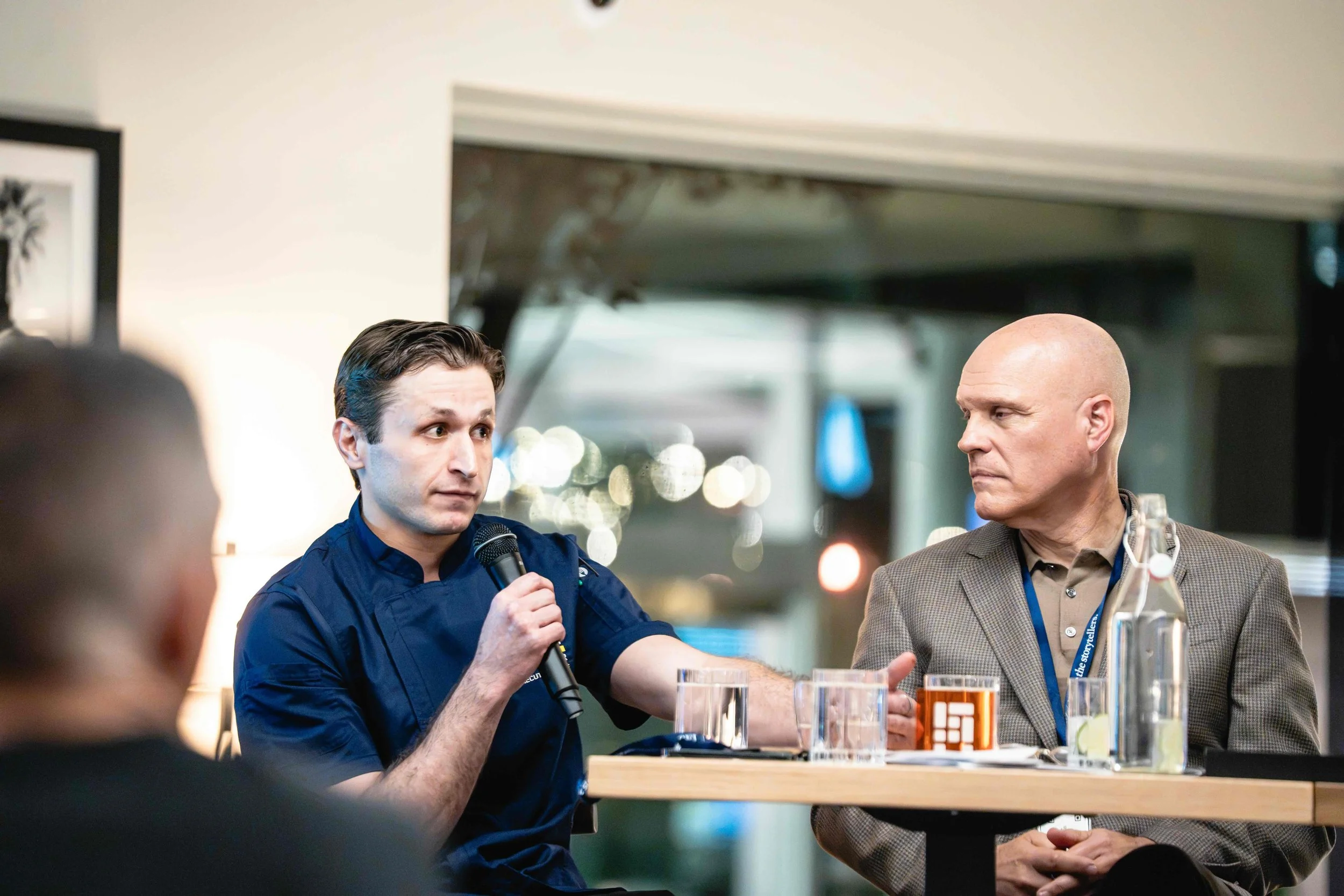
Alden executive chef Brett Fryer, left, answers audience questions with food writer Tom Sietsema. Photo by Richie Meno, Arizona State University student.
At least three prominent writers and critics say there is.
They spoke on Oct. 22 during the Society for Features Journalism conference’s opening reception at the Phoenix Art Museum’s Alden restaurant. The critics were optimistic about the continuing need and desire for expertise. After the panel discussion, they were joined by three local chefs for a question-and-answer session with the audience.
“San Francisco’s food scene is an interesting place because it was a city that really struggled to come back out of the pandemic,” panelist and San Francisco Standard food editor Lauren Saria said.
Tens of thousands of restaurant workers lost their jobs nationwide and thousands of restaurants closed. Restaurants are now in a “slow rebound that [is] sort of just now getting its stride,” she added.
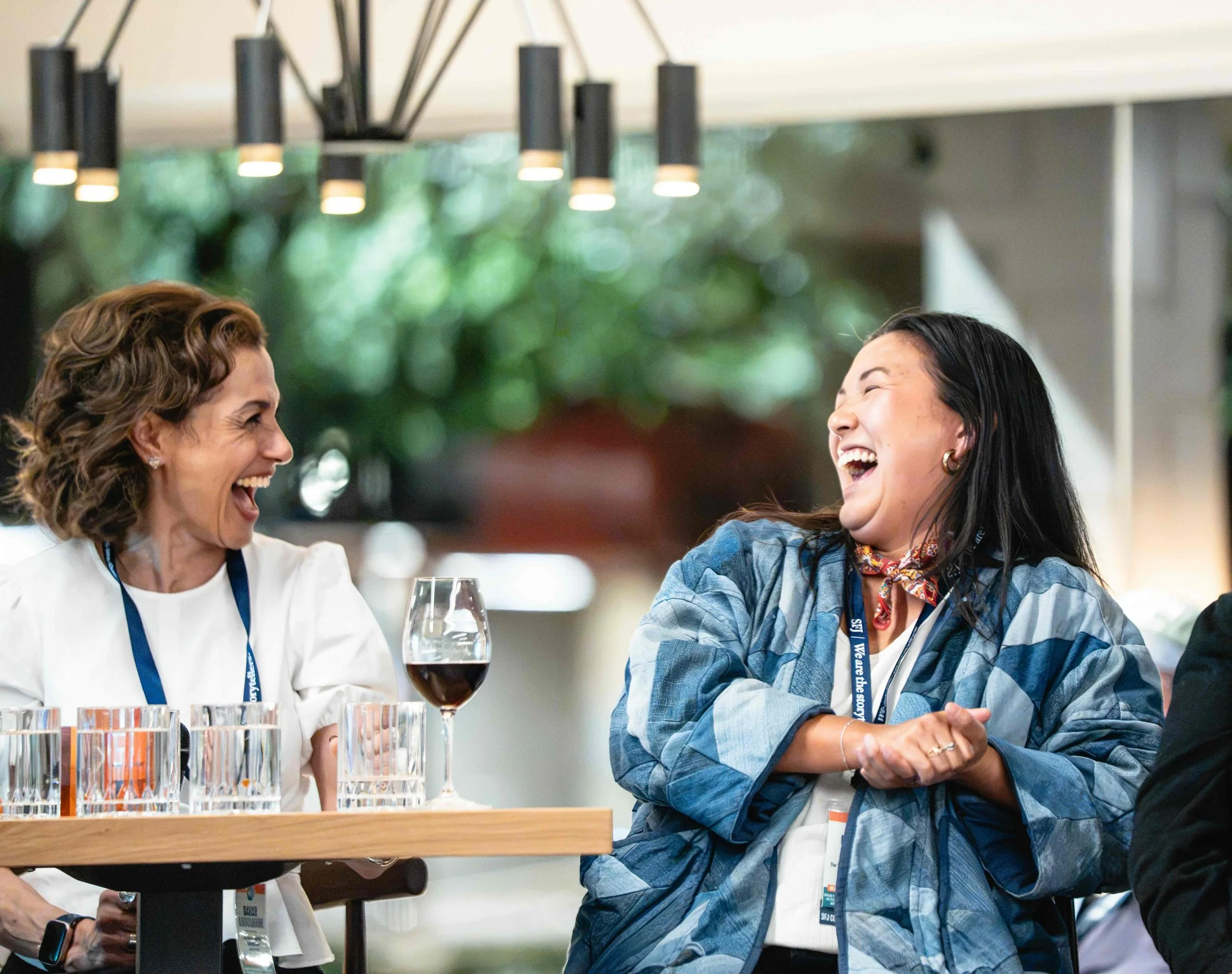
Arizona Republic restaurant critic Bahar Anooshahr, left, and San Francisco Standard food editor Lauren Saria have a fun moment during the opening reception. Photo by Richie Meno, Arizona State University student.
Saria was joined by Tom Sietsema, who was food critic at the Washington Post for almost 26 years and now writes about food for the Washington Sun, and Bahar Anooshahr, the restaurant critic at the Arizona Republic. They chatted with one another and with Phoenix chefs Lori Hashimoto, Brett Fryer and Gio Osso.
The cost of going to a restaurant has increased beyond what some can afford and is impacting restaurant attendance, but pop-ups are reinvigorating the market. The panelists agreed that the industry is making a comeback — of sorts.
They all emphasized the crucial point that restauranteering and food writing are forms of art that run deeper than the birds-eye view.
“If going to a restaurant was only for food, they wouldn’t look like this,” Saria said, gesturing around the ambient-lit, open dining room space with an outdoor terrace.
Sietsema said that his readers clarified for him that in a restaurant, the food isn’t everything.
“[Readers] are very forgiving of a place with middling food as long as that place made them feel good,” Sietsema said.
Food criticism is much more than about a dish, he continued. It is the critic’s job to capture that environment in a tangible way for readers.
He acknowledged that food writing has been altered by growing numbers of influencers.
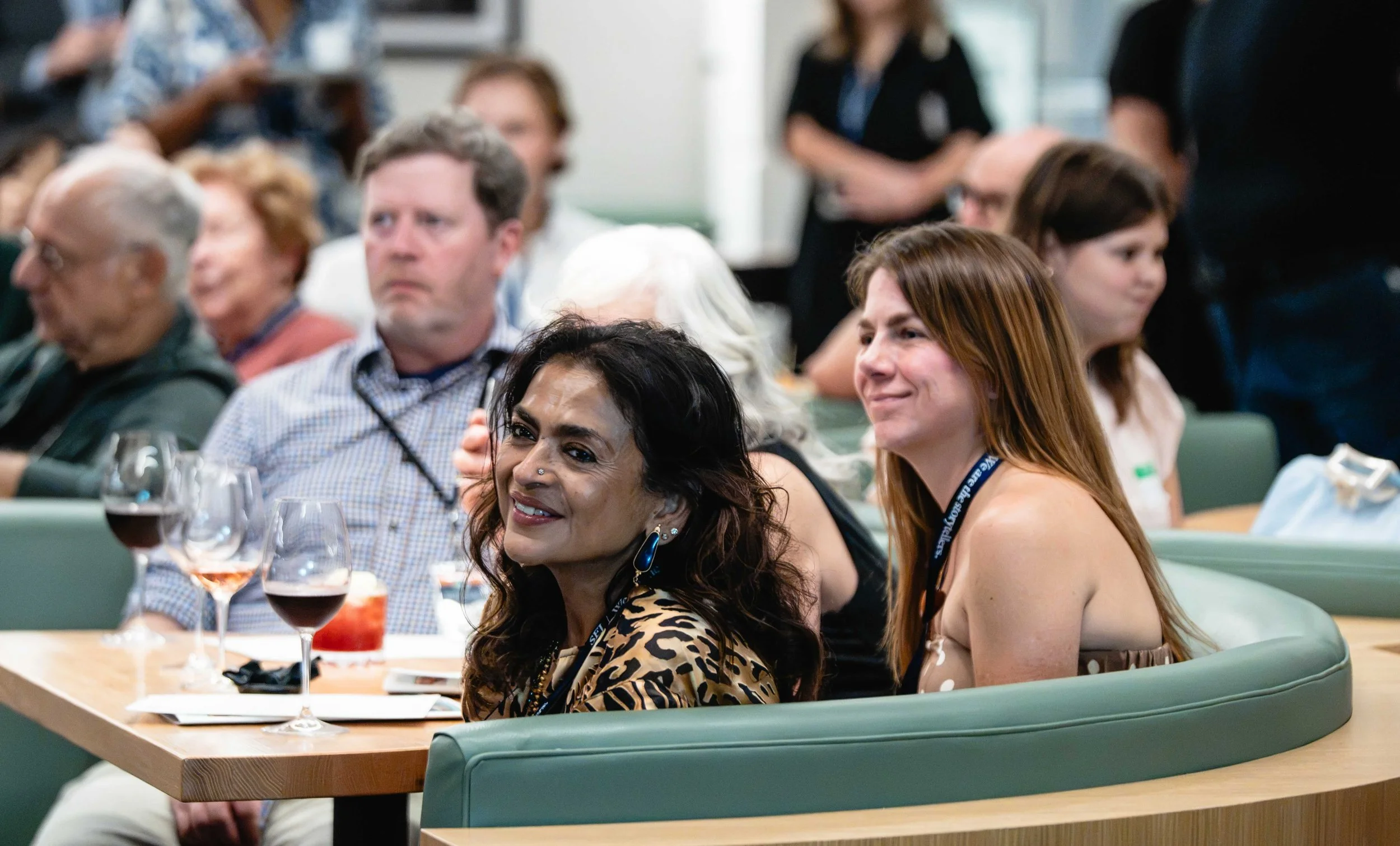
Conference attendees were eating it all up during the opening reception! Photo by Richie Meno, Arizona State University student.
“Everyone and their mother is a food critic right now,” Sietsema said.
Fryer, Alden’s executive chef, highlighted that while the influencer crowd appears superficial, they still play the important role of bringing in guests and it would be difficult not to step up to the challenge.
“As hard as it is to impress someone in one sitting and in one go, you gotta take advantage of it because it’s a tool to keep us going,” Fryer said.
Anooshahr said many chefs refuse to work with influencers, adding: “When critics and journalists look at restaurants, they go into that not just about the food, [but] about the origin story of where the restaurant came from.”
The panelists agreed that critics will always hold a valued role because restaurants will always be central in our lives.
“We don't necessarily need books or music or restaurants for that matter to live, “ Seitsema said, “but it sure makes life more worth living, right?”
Amelia Thompson is studying broadcast journalism with a minor in political science at ASU's Walter Cronkite School of Journalism and Mass Communication.