
Eli Saslow shows how to zoom in on national tension points affecting ordinary people
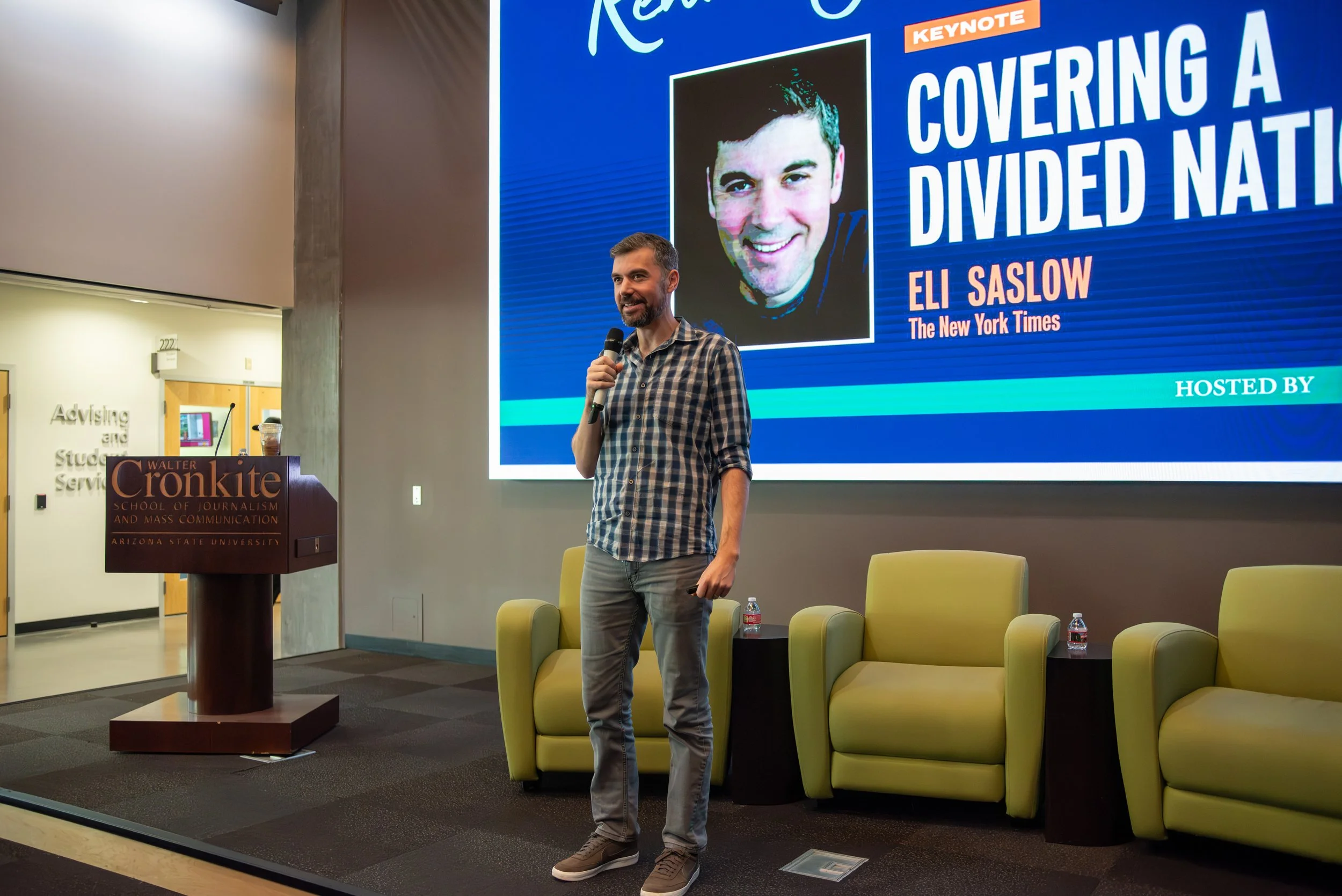
Eli Saslow delivered a keynote address at SFJ’s national conference on the theme “Covering a Divided Nation.” Photo by Zineb Haddaji, a Hubert H. Humphrey Fellow at ASU’s Cronkite School from Djibouti
Eli Saslow is a reporter for The New York Times who has a very special superpower.
Saslow has the ability, year after year, to keep wading into the most challenging stories about the most divisive issues of our time — issues like racism, mass shootings, poverty, addiction, homelessness, the Jan. 6 Capitol riot, cruel behavior on the internet and more — and then finding deeply intimate stories about regular people who have been caught up in these issues.
There’s a reason he’s won two Pulitzer Prizes as well as the 2025 Scripps Howard Award for Excellence in Narrative Human-Interest Storytelling, honoring Ernie Pyle.
During the Society for Features Journalism conference in early November 2025 at Arizona State University’s Walter Cronkite School of Journalism and Mass Communications in Phoenix, Saslow described his process for illuminating large, thorny issues through small, important moments.
You can watch Saslow’s full presentation at our YouTube channel, with an introduction from SFJ President Laura Coffey:
Here are five takeaways from Saslow’s keynote presentation:
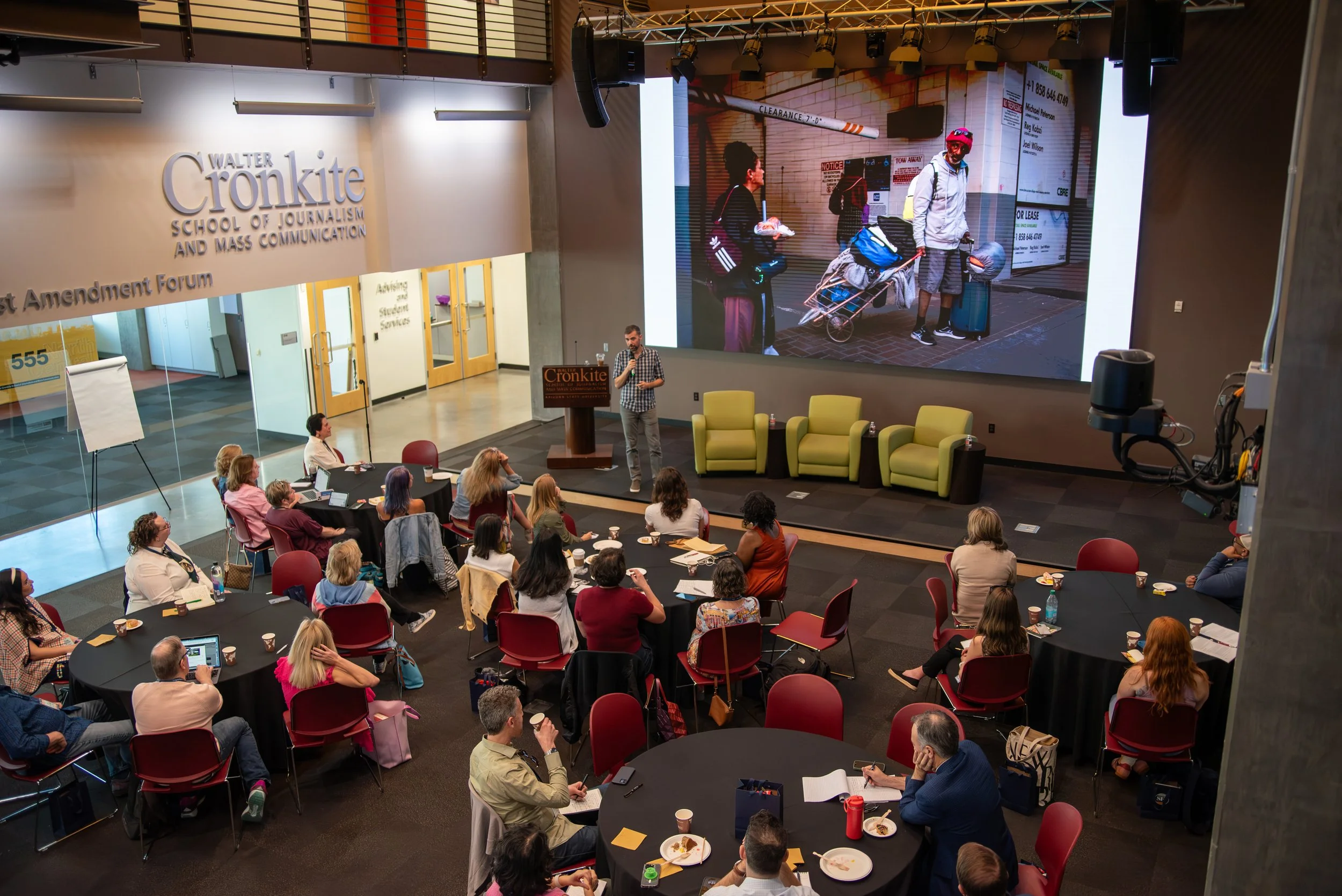
Eli Saslow spoke about his reporting process to a rapt crowd of journalists on Nov. 7, 2025 at SFJ’s national conference at Arizona State University in Phoenix. Photo by Zineb Haddaji, a Hubert H. Humphrey Fellow at ASU’s Cronkite School from Djibouti
Tell big national stories through the lives of individuals. Saslow noted that abstract reporting fades from memory faster than stories centered around specific people. He described his job as “trying to find a way to write about the big issues in the country, the big tension points in America, through people's lives — trying to take these big, kind of intractable, issues and make them intimate and felt.”
Invest time to build trust. Spending days (not hours) with sources allows them to forget that a reporter is there. This creates opportunities for more honest, intimate moments and dialogue. “A big part of my work is being there for long enough and also arriving at moments when enough is going on in people’s lives where me being there is not the most important thing,” Saslow said.
Let scenes and conversations carry the story. Narrative journalism works best when readers feel present in the room, hearing people speak and witnessing events, Saslow said. This can be far more powerful than being told what to think.
Embrace nuance instead of simplifying complex issues. Whether covering elections, immigration, homelessness or trauma, strong stories resist easy villains and heroes. Instead, they show multiple perspectives and contradictions at once. “I think probably the biggest way to invite people into your stories is to make the people in your stories feel like three-dimensional humans,” Saslow said.
Storytelling can rebuild empathy across divides. In an increasingly polarized, siloed society, journalism that helps readers inhabit someone else’s world is more than meaningful. It’s essential to democracy.